
Views: 0 Author: Site Editor Publish Time: 2025-11-13 Origin: Site


In today’s fast-paced global food industry, the demand for efficient and reliable preservation methods has never been higher. Consumers expect seafood and meat products to maintain their freshness, flavor, and nutritional value from the point of processing all the way to their plates. This rising demand has driven the adoption of advanced technologies that ensure both quality and safety throughout the supply chain.
Among these technologies, quick freezers have emerged as a game-changer. By rapidly lowering the temperature of seafood and meat products, quick freezers prevent the formation of large ice crystals that can damage texture and reduce nutritional value. This innovation not only preserves the original quality of the food but also significantly enhances processing efficiency and extends shelf life.
In this article, we will explore how quick freezers are revolutionizing seafood and meat processing, examining their impact on product quality, production efficiency, and supply chain optimization.
A Quick Freezer is a machine that rapidly lowers the temperature of food, such as seafood or meat. Unlike traditional freezing, it prevents large ice crystals from forming, preserving texture, flavor, and nutrients. Quick freezers are essential in modern food processing and cold chain logistics.
Spiral Freezers – Food moves on a spiral conveyor while cold air circulates. Ideal for small to medium-sized items, saving space and ensuring uniform freezing.
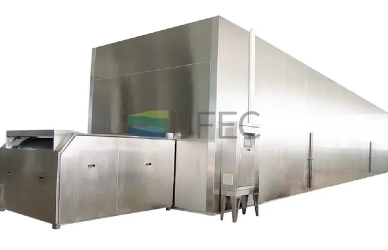
Tunnel Freezers – Continuous freezing in a long tunnel with airflow. Suitable for high-volume seafood and meat processing.
Plate Freezers – Food is pressed between cooled plates. Efficient for blocks or packaged products like meat or fish fillets.
Fluidized Bed Freezers – High-velocity cold air freezes lightweight products individually, perfect for shrimp, small fish, or sliced seafood.
Quick freezers freeze food rapidly to prevent large ice crystals, preserving cell structure, texture, taste, and nutrients. They also inhibit microbial growth, ensuring food safety and high quality.
One of the most significant advantages of using a Quick Freezer in seafood processing is its ability to preserve product quality. Rapid freezing prevents the formation of large ice crystals, which can damage the delicate proteins in fish, shrimp, and shellfish. By maintaining the structural integrity of the seafood, quick freezers ensure that the final product retains its firmness, appearance, and overall quality after thawing.
Quick freezers also help maintain the nutritional value and flavor of seafood. The rapid freezing process locks in vitamins, minerals, and natural juices while preserving the original taste and texture. Consumers receive seafood that is closer to its fresh state, which is especially important for premium products like sashimi-grade fish or high-quality shellfish.
Using a Quick Freezer allows seafood processors to handle large batches efficiently. Unlike traditional freezing methods, quick freezers significantly reduce waiting time, enabling continuous or batch processing. This efficiency not only speeds up production but also reduces operational bottlenecks, helping companies meet high-demand periods or export schedules without compromising quality.
Quick freezing extends the shelf life of seafood, making it easier to manage transportation and distribution. Frozen seafood can be shipped over longer distances while maintaining quality, which is critical for international markets. By integrating quick freezers into the processing line, companies can optimize their supply chain, reduce waste, and expand into new export markets with confidence.
A key benefit of using a Quick Freezer in meat processing is the preservation of quality. Rapid freezing reduces moisture loss and prevents the meat from drying out. This ensures that beef, pork, chicken, or other meat products maintain their natural texture, juiciness, and appearance even after extended storage or transportation.
Quick freezers also contribute to food safety by rapidly lowering the temperature of meat products, which inhibits the growth of bacteria and other microorganisms. This fast freezing process minimizes the risk of spoilage and helps meet stringent food safety standards required for both domestic consumption and export.
Integrating a Quick Freezer into meat processing lines supports continuous production, allowing manufacturers to freeze large volumes without interruption. This not only increases output but also reduces processing time, helping meat processors meet high demand periods more effectively.
Quick freezers enable the production of innovative meat products, such as pre-cut portions, slices, or pre-prepared meals. By freezing these products quickly, manufacturers can maintain their shape, texture, and quality, offering versatile options for retail, restaurants, or ready-to-eat markets.
One of the main advantages of integrating a Quick Freezer into food processing operations is cost savings. By rapidly freezing seafood, meat, and other perishable products, companies can significantly reduce waste caused by spoilage or degradation. Minimizing product loss not only lowers operational costs but also improves overall profitability for processors and distributors.
Quick freezers provide a competitive edge in both domestic and international markets. Rapid freezing preserves the quality, taste, and appearance of products, allowing companies to consistently deliver high-standard seafood and meat to consumers. This reliability is essential for meeting export requirements and maintaining brand reputation in global markets.
Modern Quick Freezers are designed with energy efficiency in mind, supporting more sustainable food processing. By consuming less power while maintaining rapid freezing performance, these systems help reduce overall energy costs and contribute to lowering the carbon footprint. Additionally, reduced food waste through effective preservation aligns with sustainable industry practices.
Quick freezers enable processors to expand their product offerings. They are suitable for a wide range of items, including seafood, meat, and ready-to-eat foods. By maintaining the quality and safety of diverse products, companies can explore new markets, develop innovative frozen food items, and meet varying consumer demands without compromising on efficiency or quality.
In a leading seafood processing facility, Quick Freezers, specifically fluidized bed freezers, were implemented to meet stringent export quality standards. By rapidly freezing shrimp, small fish, and shellfish, the plant was able to maintain the original texture, color, and flavor of its products. This not only ensured compliance with international regulations but also enhanced customer satisfaction in export markets, demonstrating the critical role of quick freezing in preserving high-value seafood.
A large meat processing plant adopted spiral quick freezers to improve production efficiency and reduce waste. The rapid freezing technology allowed continuous processing of beef, pork, and chicken products, minimizing moisture loss and preserving texture. As a result, the plant significantly increased output while maintaining consistent product quality, highlighting how quick freezers can optimize both productivity and profitability in the meat industry.
Quick freezers have also transformed cold chain logistics by improving transport efficiency and product quality. Frozen seafood and meat can now be transported over longer distances without compromising freshness. By integrating quick freezers at strategic points in the supply chain, companies can maintain optimal temperatures, reduce spoilage, and ensure that products reach consumers in peak condition. This demonstrates the strategic value of quick freezers beyond the production line, supporting both domestic and international distribution.
Quick Freezers are highly versatile and can be used for a wide range of seafood and meat products. They are ideal for fish, shrimp, shellfish, as well as beef, pork, chicken, and other types of meat. The rapid freezing process ensures that delicate seafood and dense meat cuts maintain their texture, flavor, and nutritional value throughout storage and transport.
A Quick Freezer preserves food quality by rapidly lowering the temperature, which prevents the formation of large ice crystals. Instead, small ice crystals form within the food, maintaining its natural texture, moisture, and nutrients. This ensures that seafood and meat retain their freshness, appearance, and taste even after long-term storage or extended shipping periods.
Modern Quick Freezers are designed with energy efficiency in mind. They often incorporate intelligent controls and advanced insulation to reduce power consumption without compromising freezing performance. This not only lowers operating costs but also supports sustainable food processing practices by minimizing energy waste while maintaining consistent product quality.
Yes, Quick Freezers can be seamlessly integrated into existing production lines. Spiral and tunnel freezers, in particular, are designed for continuous operation and can handle high-volume processing without interrupting workflow. This makes it easy for seafood and meat processing plants to upgrade their freezing capabilities while maintaining efficient production schedules.
In summary, Quick Freezers play a crucial role in modern seafood and meat processing by preserving quality, maintaining freshness, and ensuring food safety. They help reduce moisture loss, prevent protein damage, and extend shelf life, while also improving production efficiency and supporting complex supply chains. Looking ahead, the future of quick freezing technology points toward smart, energy-efficient quick freezers that offer even greater precision, sustainability, and versatility, making them an essential tool for the evolving global food industry.
